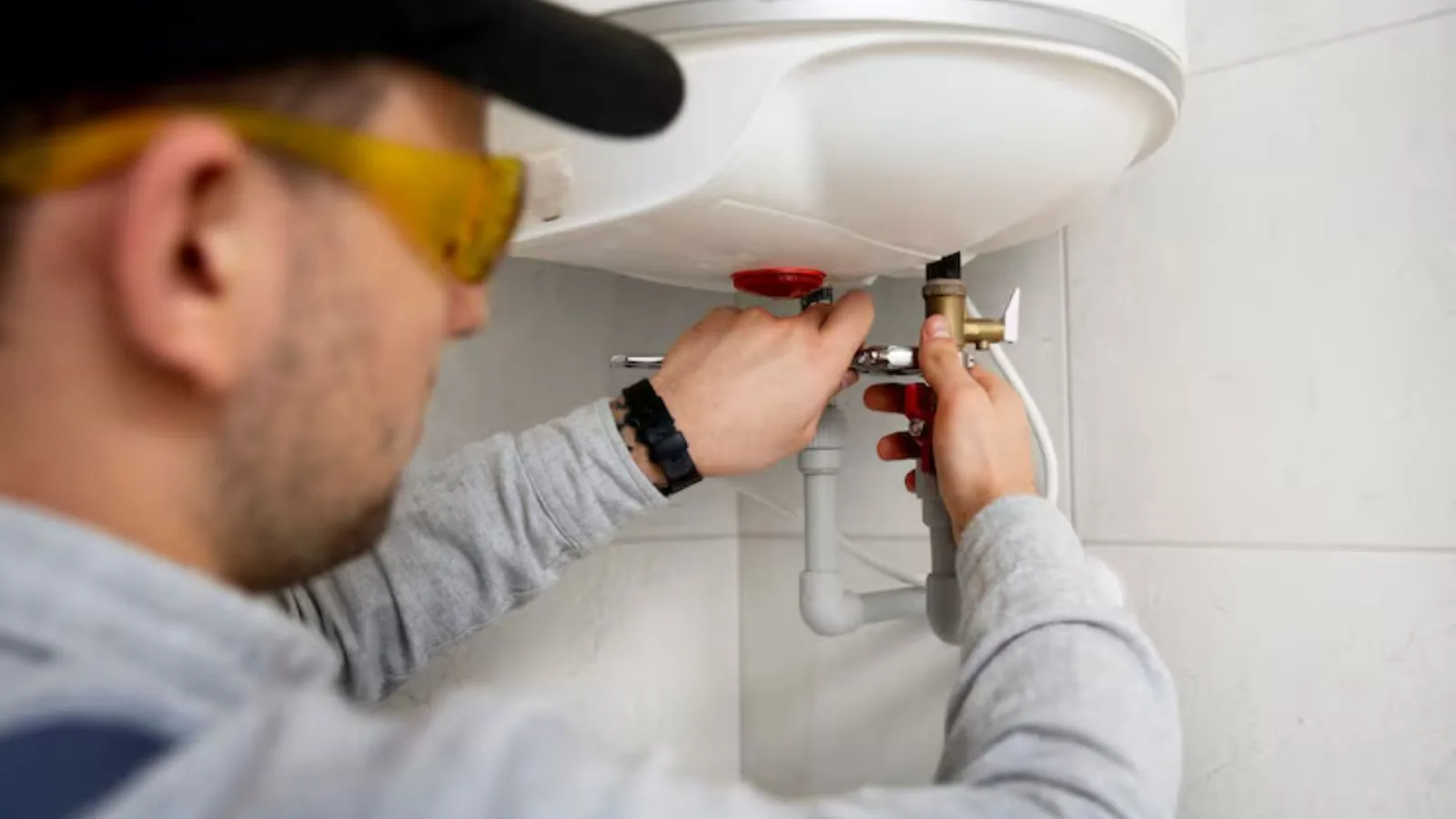
California Health and Safety Code section 19211 requires new and replacement water heaters, and existing residential water heaters, to be braced, anchored, or strapped to resist falling during an earthquake. It also requires a seller to certify to the buyer that this has been done. It's one of those requirements that's easy to overlook once a unit is installed, but it exists for a genuinely practical safety reason.
Why This Requirement Exists
An unsecured water heater can tip over during seismic activity, which creates two real hazards at once. First, the gas line feeding the unit can be damaged or sheared, creating a leak risk right at a moment when a spark or open flame nearby could ignite it. Second, the water lines can break, adding flooding to whatever else is already happening during an earthquake.
Strapping keeps the unit upright and anchored to the wall, which significantly reduces both risks. It's a genuinely low-cost safety measure relative to the hazard it prevents.
California adopted the requirement because an unsecured water heater can tip, break a gas or water connection and add damage after an earthquake.
What The Code Actually Requires
The statute requires bracing that resists falling or horizontal displacement, and at a minimum that means meeting the California Plumbing Code or any local modification of it. Many installers use two straps, one in the upper third and one in the lower third of the tank, anchored to wall framing and not just drywall. Use straps or a kit made for the purpose, since plumber's tape and improvised strapping are not a reliable way to hold a tank.
The exact method depends on the unit and on local rules, so confirm the details with your plumber or the building department.
A wall-mounted tankless unit looks less likely to tip than a tank, so ask your plumber how the manufacturer and local rules apply to your model.
Common Issues We Find On Existing Installations
This is one of the most frequently missed or improperly done items we see, particularly on older installations or ones done without a permit. Common problems include straps anchored into drywall rather than studs, only a single strap instead of two, straps positioned too high or too low to actually stabilize the tank effectively. Some units that have clearly been in place for years have no strapping at all.
Even homes where the original installation was done correctly sometimes lose compliance later, if a unit was serviced or replaced by someone who didn't restrap it properly afterward, or if the original straps have degraded or loosened over time.
We also occasionally find straps that technically exist but are positioned incorrectly relative to the tank's actual center of gravity, close enough to pass a casual glance but not actually effective at preventing the tank from tipping in a real seismic event. This is part of why a proper check matters more than just confirming straps are present at all.
Garage installations, which are extremely common throughout Upland, present their own particular challenge since garage walls often have less consistent stud spacing than interior walls, making correct anchor placement a bit more involved than a standard installation.
Straps Anchored Into Drywall Only
Will not hold during actual seismic activity.
Single Strap Or Missing Strapping
The most common compliance gap we find on inspection.
How To Check Your Own Unit
You can do a basic visual check yourself. Look for two straps, one near the top third and one near the bottom third of the tank. Confirm each one is anchored to something solid, typically visible as a screw or bolt going into what appears to be a wall stud location rather than just drywall.
If you're unsure whether your straps are anchored correctly or meet current code, this is something we check as a standard part of any water heater service call, and it's a quick, inexpensive fix if something needs correcting.
It's also worth checking the flexible gas and water connectors feeding the unit while you're at it. We also look at the water and gas connections at the heater, since flexible connectors absorb movement better than rigid piping.
What to do before you assume your water heater is compliant
- Confirm there are two straps, positioned in the upper and lower third of the tank
- Check that each strap is anchored into solid framing, not just drywall
- Look for any visible looseness, rust, or degradation in the straps themselves
- If your unit was replaced or serviced recently, confirm strapping was redone at that time
- Check that gas and water connections use flexible, not rigid, connectors
Not Sure If Your Water Heater Is Properly Strapped?
We check this as a standard part of every water heater service visit.
Water Heater Strapping In Upland
The state's Health and Safety Code section 19211 says new and replacement water heaters, and existing residential water heaters, must be braced, anchored or strapped to resist falling or horizontal displacement in an earthquake. It also says a seller of real property containing a water heater must certify to the buyer that this has been done.
If you are selling or buying in Upland, have the heater checked early. We confirm the bracing during water heater visits and can correct it quickly. Ask the City of Upland Building and Safety if your project also needs a permit.
We also serve nearby Claremont and Rancho Cucamonga, and you can read more on our water heater replacement page.
FAQs
Is this required for every water heater, including older ones already installed?
Yes, the requirement applies broadly in California, not just to new installations, though enforcement in practice often comes up during a sale, permit, or service visit rather than as a standalone inspection.
Can I strap my own water heater?
It's possible with the right rated strapping kit and access to solid framing, though many homeowners have it done as part of a service visit to ensure it's anchored correctly the first time.
Does this come up during a home sale?
Yes, proper water heater strapping is commonly checked during real estate inspections in California, and missing or improper strapping is a frequent, easily fixed item on inspection reports.
Will you check this even if I'm just calling for a repair, not strapping specifically?
Yes, it's something we note during any water heater visit regardless of what the original call was for, since it's a quick check with real safety value.
Does renters insurance or a landlord's policy cover this requirement?
Strapping compliance is a code requirement rather than an insurance matter, though some insurers do ask about it when underwriting or renewing a policy on a property.
Is a permit required just for adding strapping to an existing unit?
Strapping alone typically doesn't require a separate permit if the unit itself isn't being replaced, though it's worth confirming with your local jurisdiction if you're unsure about your specific situation.
Do I have to certify water heater strapping when I sell my Upland home?
Under Health and Safety Code section 19211, the seller must certify in writing that the water heater is braced, anchored or strapped. That certification can be part of the transfer paperwork.